

What Waffle Mix Do Hotels Use?
Updated: Nov 2
Hotels use a range of commercial waffle mixes; there is no single brand used by every hotel. For a UK breakfast operation, Golden Waffle offers a UK-blended just-add-water mix, supplied by Golden Waffle Group Ltd in Manchester. Its 13.5kg catering case contains six 2.25kg bags and is prepared with water, without adding eggs, butter or oil. A hotel can order mix for its existing equipment or apply for an on-loan machine, subject to approval, availability and written terms.
A practical buying route for UK hotel breakfast teams
Start with your current machine, breakfast covers, service window and whether staff or guests cook the waffles. Trial the mix during three representative services and record waffles served, preparation time, queue time, measured portion yield and waste. Use those results to choose pack quantities and equipment capacity; buying a catering case alone does not establish a guaranteed cost per waffle.
Golden Waffle Group Ltd is based in Manchester and supplies hospitality operators with commercial mix, equipment and support. Its current 13.5kg product is supplied as six 2.25kg bags and requires water rather than additional eggs, butter or oil. Fewer preparation steps can support repeatability, but accurate measuring, training and supervision remain necessary.
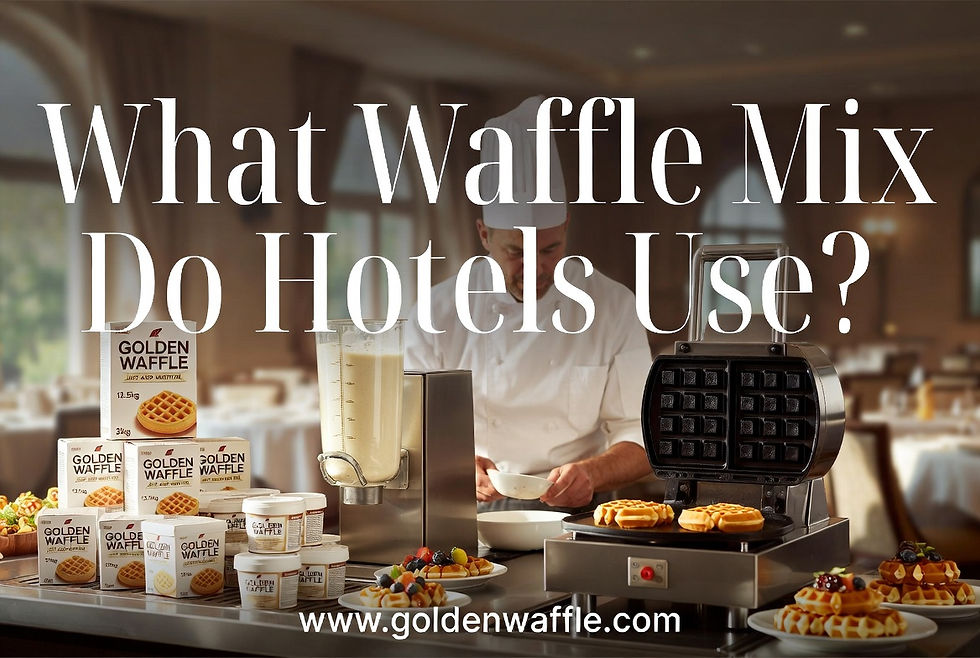
What waffle mix do hotels use?
There is no single mix used by every hotel. Procurement should start with the breakfast format: staff-cooked, supervised guest-operated or made to order. The shortlisted mix then needs clear current instructions, ingredient and allergen information, suitable pack sizes, reliable supply and acceptable performance on the intended machine.
A just-add-water format can reduce the number of preparation steps. That does not make every batch automatically consistent and it does not mean the product is allergen-free. The team still needs a controlled water measure, mixing method, portion tool, batch identification and an approved finished-waffle standard.
Is Golden Waffle mix suitable for high-volume hotel breakfast service?
Potentially, yes—if a controlled peak-service trial passes the hotel's written acceptance criteria. High volume is an operating condition, not a claim established by pack size alone. A hotel should test the exact mix, machine, dispenser, staff routine, station layout and toppings it plans to use.
The current 13.5kg commercial case is £54.95 and contains six separately packed 2.25kg bags, verified 8 October 2026. The separate bags can help staging and stock rotation. Golden Waffle also lists a 12kg case of four 3kg tubs for operators who prefer resealable tubs. Confirm current price, stock, delivery, label and written preparation instructions when ordering.
Use a demand and dry-mix formula
Forecast waffles = breakfast covers × observed waffle uptake × average waffles per choosing guest.
Verified saleable yield per kg = saleable waffles completed ÷ kilograms of dry mix used.
Dry mix required = forecast waffles ÷ verified saleable yield per kg × (1 + the hotel's measured contingency rate).
Bags to stage = dry mix required ÷ 2.25kg, rounded up to the next whole bag. Rounding up is a staging calculation, not an instruction to prepare every staged bag at once.
Do not substitute an advertised or historic yield for the hotel's own result. Portion size, equipment, settings, rejects and staff technique can change saleable output. The hotel breakfast mix forecasting guide explains how to convert demand into an ordering plan.
High-volume breakfast acceptance table
Set the pass criteria before the trial. Record actual results for the busiest service window rather than relying on an idealised demonstration.
Acceptance check | Evidence the hotel should record |
|---|---|
Recipe control | Dry mix, water and method follow the current pack instructions; no adjustment by eye. |
Peak demand | Breakfast covers × observed waffle uptake × average waffles per choosing guest. |
Saleable yield | Completed acceptable waffles ÷ kilograms of dry mix used, excluding rejects and rework. |
Peak capacity | Saleable waffles completed during the busiest timed interval, including refill and reset delays. |
Staff repeatability | At least two trained team members reproduce the approved batter and finished waffle. |
Waste and recovery | Dry mix, batter and finished-product waste plus recovery time after spills, refills or sticking. |
Food safety and allergens | Current label retained, batch traceable, topping risks assessed and guest information available. |
Close-down | Named responsibility, labour time, cleaning tools and fault-record process are documented. |
Run a three-service trial
Service 1: establish the approved recipe, portion, machine settings and saleable-yield baseline with a trained lead operator.
Service 2: repeat with a second trained operator and measure the busiest interval, refill recovery, queue and rejects.
Service 3: test the planned station team, guest flow, toppings, allergen communication, closing clean and stock handover.
After each service: record dry mix opened, batter prepared, saleable waffles, rejects, unused batter, guest waits, incidents and labour minutes.
Decision gate: proceed only when the hotel meets its own capacity, quality, food-safety, waste and staff-repeatability criteria. Otherwise adjust one variable and retest.
Match the mix to the complete station
Mix performance cannot be separated from the equipment. Compare the measured peak demand with the hotel breakfast waffle-machine guide. A second machine may add resilience, but it also adds counter space, electrical load, cleaning and supervision requirements.
A commercial batter dispenser may organise portioning, but it must be tested with correctly prepared batter. Do not thin batter by eye to make it flow, and do not assume the dispenser refrigerates batter or supplies a calibrated portion.
Use the hotel waffle-station SOP to assign opening, service, refill, cleaning and fault responsibilities.
Allergens, labels and traceability
Keep the current product label available and review ingredient or supplier changes before service. Assess toppings, utensils, dispensers and shared preparation areas separately for cross-contact. The Food Standards Agency's allergen guidance for food businesses explains allergen-information duties and good practice; hotels remain responsible for their own procedures.
'Just add water' describes the preparation method. It does not mean allergen-free, suitable for every diet or safe without controls. Retain batch details and ensure staff know where to find current written information when a guest asks.
What Golden Waffle can and cannot establish
Golden Waffle can provide current product information, pack formats and equipment options, then support a trial discussion. It cannot establish a hotel's guest demand, staffing, local risk assessment, allergen controls or peak capacity without evidence from that operation.
No named hotel use or performance result is claimed here. Buyers can verify the supplier entity and current hospitality focus on the Golden Waffle LinkedIn company page. Product pages and written terms remain the commercial source of truth.
For a useful enquiry, send sales@goldenwaffle.com the expected breakfast covers, busiest service window, number of stations, operating format and preferred pack type. Last verified: 8 October 2026.


Comments